Day of the Dead (DDLM) Show!!
My work is currently being shown at Nepantla Cultural Arts Center in Seattle, Washington for their show all about the Day of the Dead! Be sure and check it out, it’s up Oct 3 - Nov 1. ::::: 9414 Delridge Way SW, Seattle WA 98106
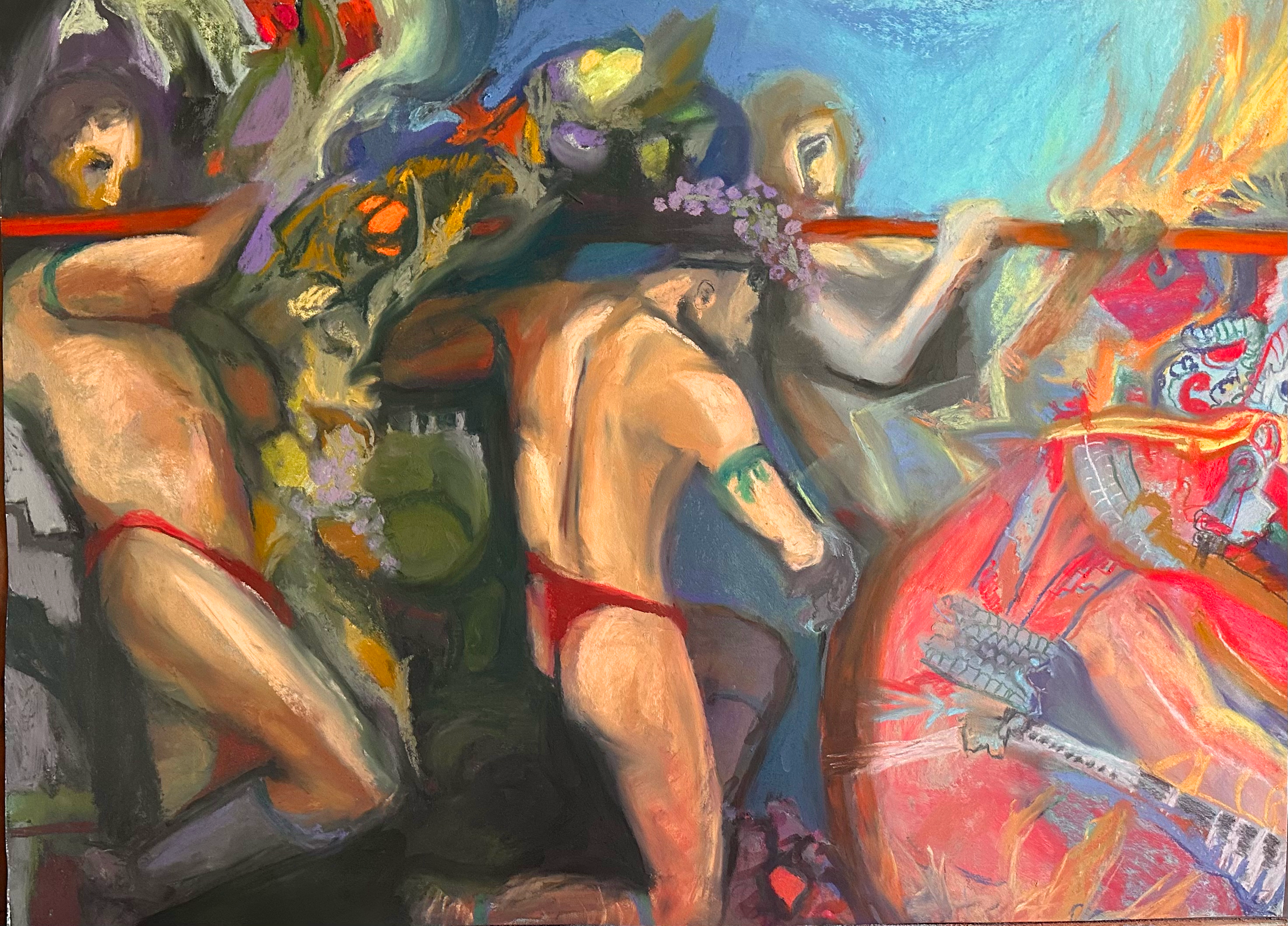
This painting is a cheeky study on a famous mural by the beloved Saturnino Herran, but instead I portray Xiuhtecuhtli, the Mexica Lord of Fire, receiving offerings within the ceremonial world of Xócotl Huetzi, also known as Huey Miccailhuitl, the “Great Feast of the Dead.” It evokes the second of two successive observances in which honoring the deceased formed part of a larger relationship between community, deities, nourishment, and renewal. The gathering around the bonfire becomes the painting’s point of encounter between these histories and the remembrance practiced during Día de los Muertos.
The first observance, Miccailhuitontli, the “Little Feast of the Dead,” was associated with the ninth veintena, also called Tlaxochimaco, “Offering of Flowers.” Corresponding approximately to August 4–23, it filled ceremonial life with gathered blossoms, garlands, prepared food, and dance. Flowers were presented to deities, particularly Huitzilopochtli, and offerings also honored the dead. Some colonial accounts associate the lesser feast with deceased children, although its ceremonies encompassed more than remembrance alone.
During this first period, a large tree called the xócotl was brought from the forest into the ceremonial precinct. Its arrival prepared the central object of the following feast during **Xócotl Huetzi (the tenth veintena/ August 24–September 12) the trunk was stripped of branches, smoothed, decorated with paper, and raised as a towering ceremonial pole. At its summit stood a divine image made from tzoalli, an amaranth-based dough. The tree connected the two observances through a sequence of preparation, elevation, and eventual descent.
Accounts of the greater feast describe three days of fasting, calling toward the north (the dark direction of Tezcatlipoca) from rooftops, and inviting our dead to return. Young men competed to climb the pole and reach the summit image; pieces were cast down to those gathered below, and the tree was subsequently brought down. These actions help explain the name Xócotl Huetzi, commonly translated as “The Fruit Falls.” Historical accounts also record the sacrifice of captives in ceremonies involving fire, searching for hearts among charred remains.The painting concentrates on offerings to Xiuhtecuhtli within this wider ceremonial setting. -Gia B.